Part of
taking care of your instrument, not only involves the assembling, playing and
taking it apart. Some of the care of the instrument has to do with the
embouchure. The embouchure is how you form your lips in order to play your
instrument.
Here are
some general principles to apply to almost all embouchure set-ups of beginning
wind players:
1. Do not
puff the cheeks or allow air to pillow underneath the lips.
2. Do not
bunch the chin up underneath the mouthpiece.
3. Maintain
a firm set to the corners of the mouth with a slight downward
turn.
4. Allow
the air to flow strongly and freely, without obstruction.
5. Too much
tension is just as bad as he opposite condition.
6. In the
brass embouchure exact mid placement of mouthpiece is a rarity.
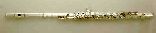
Embouchure for Flute:
Center your
lips on the hole by covering the hole with your lips and then rolling the hole
out slightly. Some students will need to drop the position of the hole down very
slightly at this point. begin blowing by keeping the lips relaxed and
flat. Hold lips together and blow air quickly through a small opening in
the very center. Bow across the hole and slightly upward. If you
don't get a clear "tooting" sound try turning the hole toward or away from your
lips. For excessive overbite or under bite try adjusting the position of
the lower jaw forward or backward to align the teeth. Strive for a
centered and strong(diaphragm supported) air stream.
Clarinet
Embouchure:
Top teeth
should lightly touch the top of the mouthpiece about 1/2 inch down, with top lip
pushing down around mouthpiece. Bottom lip should roll slightly over
bottom teeth and give solid support (touching about 1/3 to 1/2 way down the
reed.) Teeth and lip should form a firm seal around complete mouthpiece
(like a draw string pouch). You should be able to firmly hold the
mouthpiece in the mouth if someone should shake it lightly. There should be
no puffing of cheeks or lips. The chin should look flat and pointed.
Air should be blown toward the reed and the head should be helped up.
Remember to keep the corners of the mouth clenched but not
smiling.
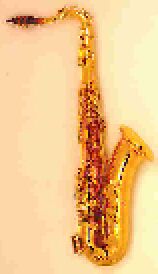
Saxophone Embouchure:
Top teeth
should lightly touch the top of the mouthpiece about 1/2 inch down, with top lip
pushing down around mouthpiece. Bottom lip should roll slightly over
bottom teeth and give solid support (touching about 1/3 to 1/2 way down the
reed). Teeth and lip should form a firm seal around complete mouthpiece (like a
draw string pouch) with equal pressure from sides. There should be no
puffing of cheeks or lips. The chin should look flat and pointed. Air
should be blown in a constantly supported, steady stream. Remember to keep
the corners of the mouth clenched but not smiling. This is similar to the
clarinet embouchure with the following exceptions. A little more
mouthpiece is inserted into the mouth. The direction of the air stream is
slightly different. The drawstring pouch effect wail not be quite as firm
and the angle of the mouthpiece will be at a higher angle as if blowing into the
mouthpiece between the reed and the tip.
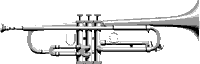
Trumpet
Embouchure:
Lips should
be moist, relaxed and together as if you just said the word "mom". There
should be no forced tightening, thinning, or flattening (sometimes called a
smile embouchure). The corners of the mouth should be firmly set in a downward
direction. Sound is produced by buzzing the lips with a quick full stream
of warm air. Puffing of the cheeks or lips is not allowed under any
circumstances! After practice the lips should be able to buzz with a
fairly relaxed feel in the center. Mouthpiece placement should show the
mouthpiece covering approximately an equal amount of upper and lower lip.
The amount of upper and lower lip will depend upon the individual
player's jaw and teeth formation.
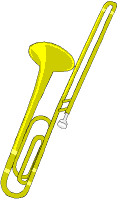
Trombone
Embouchure:
Lips should
be moist, relaxed and together as if you just said the word"mem". There should
be no forced tightening, thinning, or flattening (sometimes called a smile
embouchure). The corners of the mouth should be firmly set in a downward
direction. Sound is produced by buzzing the lips with a quick full stream
of warm air. Puffing of the cheeks or lips is not allowed under any
circumstances! After practice the lips should be able to buzz with a
fairly relaxed feel in the center. Mouthpiece placement should show the
mouthpiece covering an approximate 60/40 ration of upper and lower
lip.
Embouchure Problems:
Woodwinds
keeping fingers in position and close to the keys can help prepare
playing
Trumpet
players flattened hand position inhibits rapid key movement
Wind
players not using enough air and breath support
Distorted
or improper angle of mouthpiece
More
Advance Players using improper mouthpieces, reeds and set-ups
Not enough
emphasis on beat development and maintenance
Trombonists
playing with improper slide grip and arm motion
Trombonists
with improper slide positions
Damage the instrument caused by improper maintenance and
assembly
Improper
practice habits
Developing Good Practice Habits
Set up a
routine - when this become a habit they are easier to maintain
A good
routine will include: warm up exercises, studies, melodic phrasing and musical
development, sight reading, warm down and instrument
maintenance
Make sure
you have clear goals to accomplish during practice
Keep
records of the time you practice and your progress
Make sure
you have a distraction free time and place to practice
When
starting out try to practice at a consistent time each day
Practicing
each day is better than more time on fewer days
Find
someone to play duets with